


Stories From The Faerie Queene
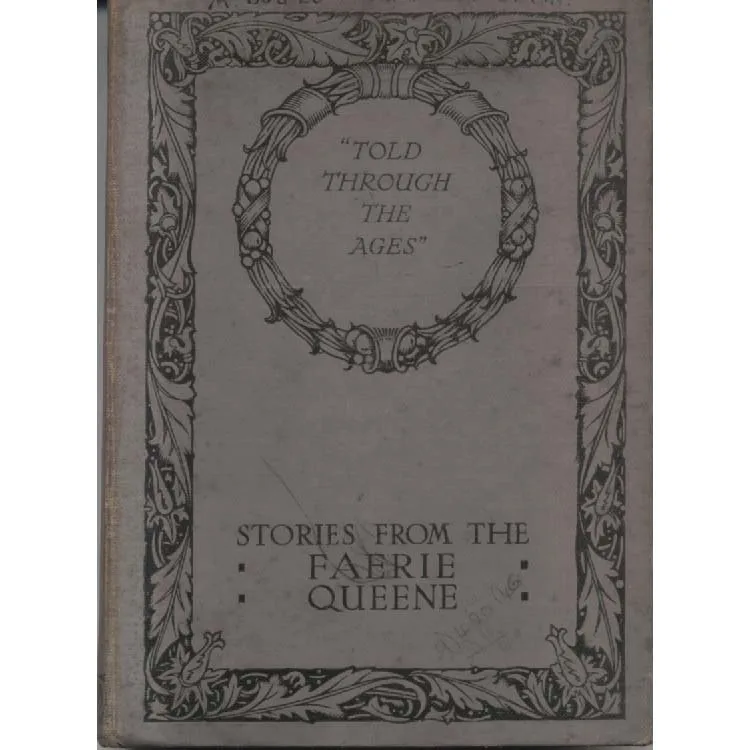
Publisher: George G Harrap
Format: Hardback
ISBN: none
There are children’s books, there are classics, and then there are books that bravely attempt to introduce younger readers to one of the most gloriously complicated poems ever written in English. Stories from the Faerie Queene falls firmly into that last category. It is the literary equivalent of handing someone a map before inviting them into a very large enchanted forest inhabited by knights, dragons, witches, enchanted castles, suspiciously allegorical monsters and enough moral virtue to keep a Victorian headmaster smiling for weeks.
Published in 1927 by George G. Harrap and retold by Lawrence H. Dawson, this handsome volume performs an admirable act of literary diplomacy. Edmund Spenser’s original The Faerie Queene is magnificent, but it also stretches to thousands upon thousands of lines of Elizabethan verse, much of which cheerfully assumes the reader has unlimited patience and a dictionary the size of a wardrobe. Dawson wisely decides that perhaps children would appreciate the dragons and heroic quests before tackling six books of sixteenth-century poetry.
The result is a wonderfully accessible collection of tales that preserves all the magic without requiring the reader to decipher every third word. Knights still ride out in shining armour. Evil still lurks in forests. Virtue still triumphs over vice after a respectable amount of sword fighting, magical interference and improbable coincidence. In short, everything one could reasonably ask from a proper medieval fantasy, except perhaps a reliable satnav.
One of the joys of these old retellings is their complete confidence that young readers possessed both imaginations and attention spans. Nobody worried about reducing everything to a three-minute animation or replacing dragons with emotionally available dinosaurs. Children were expected to cope with chivalry, symbolism, courage, temptation and the occasional terrifying monster before being sent outside to play.
Physically, this copy has clearly enjoyed a life rather than spending a century imprisoned on an untouched bookshelf. There is some writing on the front cover, together with ownership inscriptions and scribbles on the inside front page. The inside rear page also carries a few pencil doodles. We rather like this sort of thing. It reminds us that books were once companions rather than museum exhibits, passed between children, claimed with enthusiastic ownership and occasionally decorated by someone who evidently found a pencil impossible to resist.
The back cover has a small ding, but nothing approaching calamity. The binding remains good and sound, the pages are otherwise clean to the eye, and it presents as a thoroughly respectable copy that has survived nearly a hundred years with considerably more dignity than many modern paperbacks manage in a fortnight.
There is also something wonderfully ironic about preserving a book whose purpose was to simplify another book that itself set out to celebrate timeless virtues through fantastically complicated allegory. Literature has always enjoyed building ladders to help readers reach other books, and this volume is a particularly charming rung on that ladder.
Whether you are introducing a young reader to Arthurian-style adventure, revisiting childhood memories, or simply enjoy handsome editions from the golden age of children’s publishing, this is an immensely likeable survivor. It captures a time when publishers believed stories could be noble without being pompous, exciting without being frantic, and educational without ever admitting that was what they were doing.
Exactly the sort of well-travelled, gently worn treasure that Crappy Old Books is delighted to send back into the world, complete with its century of perfectly harmless scribbles and the quiet confidence that the best adventures rarely begin with pristine pages.
Keep browsing: See more Kids books Other books by Lawrence H Dawson
